
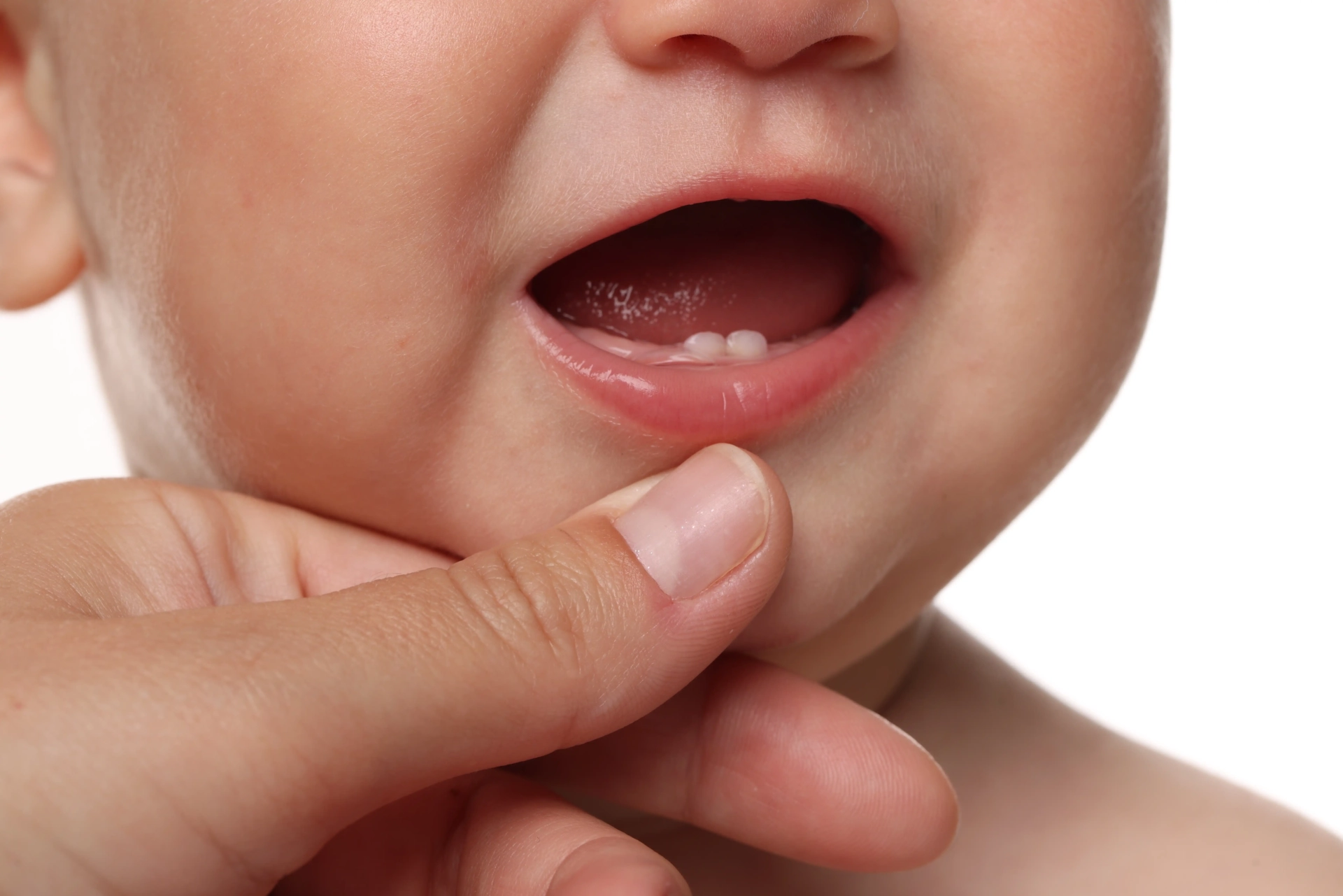
Teething starts around 6 to 7 months of age with the top two central teeth first to appear followed by the central two bottom teeth. Teething continues until age 3 years when all 20 primary teeth have erupted. Approximately 80% of babies show some signs or symptoms during teething, the most common being:
- Gum irritation
- Irritability
- Drooling
- Increased biting
- Increased sucking
- Wakefulness
- Decreased appetite
- Gum-rubbing
- Mild temperature elevation that does not reach a fever (100.4°F or higher)
The teething period is an 8-day window period starting 4 days before eruption and ending 3 days after eruption.
When Is It Not Teething?
It is likely not teething when there is:
- Fever of 100.4°F or higher
- Vomiting
- Runny nose, cough and other symptoms of a viral cold
- Diaper rash
- Needing frequent and long-term medication like acetaminophen and ibuprofen (Note: ibuprofen is not indicated for babies less than 6 months old)
Treatments
First-line treatment options include chewing on hard or chilled teething rings, and gentle gum massages. If these are not sufficient, then appropriate doses of acetaminophen can be used every 4 to 6 hours as needed.
What to Avoid
- Benzocaine-containing gels: Over-the-counter products like Orajel carry a risk of a life-threatening condition called methemoglobinemia, in which oxygen-carrying capacity is severely reduced. The FDA has warned that benzocaine products should not be used in infants and children younger than 2 years of age. The American Academy of Pediatrics contraindicates the use of topical benzocaine for teething.
- Lidocaine-based teething tablets: Most notably Hyland’s Teething Tablets have been linked to serious adverse events. The FDA reports that these products contain inconsistent amounts of Atropa belladonna (deadly nightshade) which can cause fever, seizures, and Apparent Life-Threatening Events (ALTE).
- Amber Teething Necklaces: Marketed with the claim that succinic acid in Baltic Amber contains anti-inflammatory and pain relief properties. There is no peer-reviewed evidence to support this. The risks include:
- Strangulation
- Aspiration and choking on beads with bead breakage
- Bacterial colonization including Staphylococcus aureus
Mimickers of Teething
- “Teething-associated runny nose”: A coexisting upper respiratory viral illness with restless sleep, irritability, low-grade fever, and fussiness.
- Ear Infection: Ear tugging, irritability, fussiness, and sleep disturbances can be teething or an ear infection. This requires visualization of the eardrum with an otoscope, especially if there is a runny nose and cough coexisting with other symptoms.
- Cow’s Milk Protein / Formula Intolerance: Can present with irritability, fussiness, loose stools, and feeding difficulties.
- GERD (Reflux): Reflux and teething can coexist and overlap. With both, the feeding pattern changes and sleep is disrupted.
- Urinary Tract Infection (UTI): Can cause fever, fussiness, irritability, and appetite changes.
When in doubt, it is best to contact your pediatrician for further discussions and management. Teething can be hard to manage, but it may not be just teething alone.
Get Our Free Teething Guide
Keeping track of what’s normal, what’s not, and what actually helps can be a lot to remember in the moment. Download our free teething guide for a quick, at-a-glance reference you can keep on hand!
Talk to a Pediatrician About Teething
f your child is teething, book a consult with your pediatrician today. At Happy Kids Pediatrics we excel at helping support you and your child through this process.
We can be reached at 913-355-9953 or by email contactus@happykidspeds.com. We are located at 605 E. Main St, Gardner KS 66030.
Feel free to walk in or call ahead. We are here to help.
– Dr. Kanwal Chaudry, MD, FAAP